
Filed under Costs · 4 min read
In many cities, setting up a new home means calling four or five different companies. In the City of Richmond, the city itself handles several of the big ones. Its Department of Public Utilities, known as DPU, runs the water, wastewater, natural gas and stormwater utilities, plus streetlights. If you are moving into Henrico or Chesterfield, some of this still applies, because the city sells water to both counties and its gas utility serves parts of them.
Water
Richmond’s water treatment plant was built on the banks of the James River in 1924 and can now produce up to 132 million gallons a day. DPU maintains more than 1,000 miles of water lines and also supplies Henrico, Chesterfield, Hanover, Goochland and Powhatan counties through wholesale contracts. Under the federal Safe Drinking Water Act, it publishes a water quality report every year.
Residential water bills have two parts: a monthly service charge based on meter size, and a volume charge for each Ccf used. Ccf is the unit of water volume used on DPU bills.
| Residential water | Charge |
|---|---|
| Monthly service charge, 5/8-inch meter | $18.90 |
| Monthly service charge, 3/4-inch meter | $26.85 |
| Volume, first 4 Ccf (lifeline rate) | $3.35 per Ccf |
| Volume, above 4 Ccf | $7.09 per Ccf |
The low first tier is the city’s lifeline rate, so a household that uses little water pays little. The city’s own example for 4 Ccf on a 5/8-inch meter: $3.35 x 4 = $13.40, plus $18.90, for a $32.30 water bill.
Wastewater
Sewer service is billed with water. The wastewater volume charge is the same for every Ccf, $10.24, plus a monthly service charge of $24.56 on a 5/8-inch meter. Because water used on lawns, gardens and car washing never reaches the treatment plant, the city adjusts wastewater bills from March through November.
Richmond’s wastewater plant, on the south bank of the James, serves about 58,000 city customers and can treat up to 75 million gallons a day. It is the largest of its kind in Virginia. About one-third of the city, roughly 12,000 acres, has a combined sewer system carrying both sewage and stormwater.
A sample monthly bill
The city’s worked example for a household using 6 Ccf in a month on a 5/8-inch meter:
- Water: 4 Ccf x $3.35 = $13.40, plus 2 Ccf x $7.09 = $14.18, plus the $18.90 service charge = $46.48
- Wastewater: 6 Ccf x $10.24 = $61.44, plus the $24.56 service charge = $86.00
- Total: $132.48
Stormwater
Developed properties pay a monthly stormwater fee, separate from water use. For single-family homes, the city bills by parcel size:
| Single-family parcel size | Monthly fee |
|---|---|
| 1 to 1,000 sq ft | $4.47 |
| 1,001 to 2,000 sq ft | $8.21 |
| 2,001 to 3,000 sq ft | $13.28 |
| 3,001 to 4,000 sq ft | $18.94 |
| Over 4,000 sq ft | $27.47 |
Most single-family parcels in the city fall in the 1,001 to 2,000 square foot band; DPU counts 24,089 of them.
Natural gas
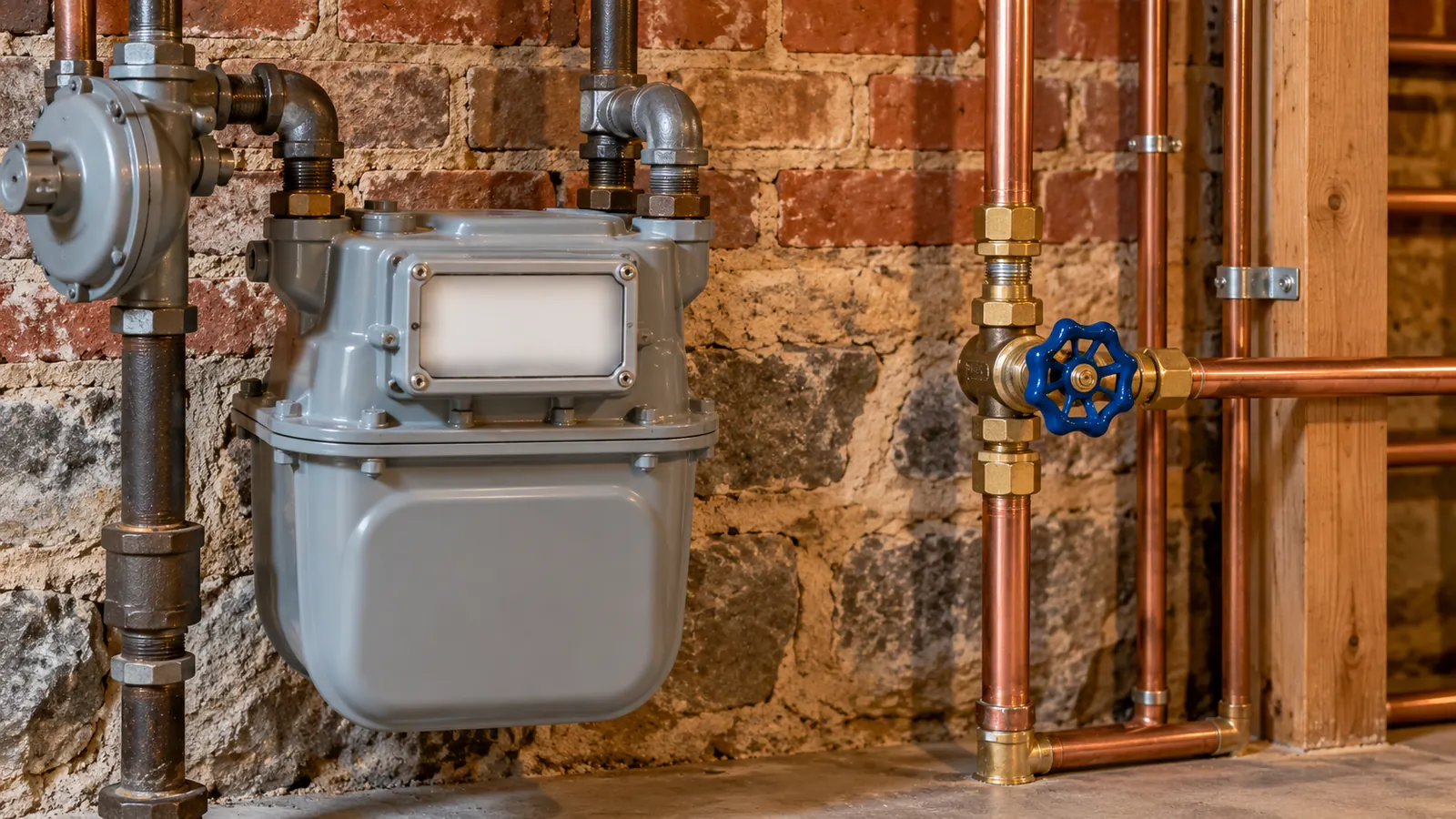
Richmond Gas Works, part of DPU, supplies natural gas to the city and portions of Henrico and Chesterfield counties. Its site has information on availability at an address and on gas permits.
If you smell gas
Natural gas has no smell on its own, so a harmless chemical with a rotten-egg odor is added to make leaks obvious. DPU’s instructions are clear: leave the area and call 911. Do not strike a match, use a phone, switch appliances or lights on or off, or even use a flashlight where you smell gas, because any of these can make a spark.
Taxes on your utility bills
The city charges a consumer utility tax on residential local telephone, cable television, electric and natural gas service, set at 7 percent of the seller’s charge excluding installation. Providers collect it and pay it to the city. The city’s finance page answers questions about bills that show another locality’s taxes, and RVA311 at (804) 646-7000 takes utility tax concerns.
Before move-in day
- Confirm whether the property is in the city or a county; that determines who bills water and sewer.
- Ask the landlord which utilities are included and whose name each account should be in.
- Ask about the meter size and typical monthly use; the base charges differ by meter.
- Read the water meter on move-in day so your first bill starts from a known number.
- Save RVA311, (804) 646-7000, for service problems and billing questions.
Tip: Plan for cooling costs: Richmond averages about 45 days a year at 90 F or hotter. See Richmond Weather and Flood Risk: Hot Summers, Light Snow and a River That Rises, and add the full utility line to your budget with The Cost of Living in Richmond, VA: Housing, Taxes, Utilities and Everyday Spending.